
होमAsian CricketSouth Africa Become New No.1 in Test Cricket, Australia Slip Two Places as WTC Picture Changes Too
South Africa Become New No.1 in Test Cricket, Australia Slip Two Places as WTC Picture Changes Too
प्रश्न: टेस्ट क्रिकेट में नंबर-1 टीम कौन है? उत्तर: दक्षिण अफ्रीका। आईसीसी टेस्ट रेटिंग में दक्षिण अफ्रीका 124 अंकों के साथ पहले और ऑस्ट्रेलिया 122 अंकों के साथ दूसरे स्थान पर है — अंतर सिर्फ दो अंकों का। प्रश्न: WTC अंकतालिका में शीर्ष तीन कौन हैं? उत्तर: न्यूजीलैंड 72.22% (पहला), दक्षिण अफ्रीका 71.43% (दूसरा), ऑस्ट्रेलिया 69.23% (तीसरा)। सीरीज से पहले ऑस्ट्रेलिया 80% के साथ पहले स्थान पर था और दो पायदान गिरकर तीसरे पर आया। प्रश्न: सीरीज का नतीजा क्या रहा? उत्तर: दक्षिण अफ्रीका ने ऑस्ट्रेलिया को 2-1 से हराया। पहला टेस्ट गंवाने के बाद वापसी; ग्केबेरहा में तेम्बा बवुमा ने 179 रन बनाए; निर्णायक मुकाबले में 176 रन की जीत। प्रश्न: सीरीज जीतने के बाद भी दक्षिण अफ्रीका का WTC प्रतिशत क्यों गिरा? उत्तर: WTC में जीत 12 अंक, ड्रॉ चार अंक, हार शून्य। हर हार भाजक में एक मैच जोड़ती है। दक्षिण अफ्रीका 4 मैचों में 3 जीत-1 हार (75%) से 7 मैचों में 5 जीत-2 हार (60/84 = 71.43%) पर आया। प्रश्न: न्यूजीलैंड ICC रेटिंग में तीसरा और WTC में पहला कैसे? उत्तर: दोनों अलग मापदंड हैं। ICC रेटिंग बहुवर्षीय भारित रोलिंग औसत है; WTC प्रतिशत मौजूदा चक्र (2025-27) के अंकों का सीधा हिसाब। विरोधाभास नहीं। प्रश्न: भारत पर असर? उत्तर: भारत के अपने WTC अंक/प्रतिशत पर कोई सीधा असर नहीं, लेकिन ऑस्ट्रेलिया का दो पायदान गिरना भारत के सापेक्ष हित में है। भारत को सात टेस्ट बाकी हैं — न्यूजीलैंड के खिलाफ 2, ऑस्ट्रेलिया के खिलाफ 5। सातों जीतना पर्याप्त शर्त है, अनिवार्य नहीं; ड्रॉ और प्रतिद्वंद्वियों के अंक-ह्रास के परिदृश्य भी संभव हैं। सावधानी: रैंकिंग के आंकड़े किस तारीख के हैं यह नहीं बताया गया; ये तालिकाएं हर मैच के बाद बदलती हैं। मैच नतीजे, 176 रन का अंतर और बवुमा की 179 रन की पारी की पुष्टि स्कोरकार्ड से करनी चाहिए — इस सामग्री में इनके लिए स्वतंत्र स्रोत नहीं है।
South Africa have overtaken Australia to claim the No.1 spot in the ICC Test rankings. After winning the three-match home series 2-1, the hosts moved to the top with 124 rating points, while Australia slipped to second on 122. That two-point gap is a message in itself — the No.1 chair is not as solid as it looks. The ICC Test rating is a weighted, rolling average of several years of results, with every new outcome eating slightly into older numbers. One defeat in the next series can hand the crown back to Australia. The news of the change at the top is big; its shelf life is not.
The same result caused an even bigger shake-up in the World Test Championship (WTC) table. Before the series, Australia led with 80 per cent. One win and two defeats later, their percentage fell to 69.23 and they dropped to third. New Zealand are first on 72.22 per cent, South Africa second on 71.43 and Australia third on 69.23 — a two-place fall, from first to third.
The WTC arithmetic needs explaining, because that is where most confusion arises. In the current cycle a Test win is worth 12 points, a draw four and a loss nothing; the percentage is points earned against points available. Before the series South Africa had three wins and one loss in four matches — 36 of 48 available points, exactly 75 per cent. Two wins and one loss in the series left them with five wins and two defeats in seven matches — 60 of 84, or 71.43 per cent.
So South Africa's percentage did not rise after winning the series; it fell. The reason is simple: every defeat adds a full match to the denominator, and the gain from a win is diluted by that larger base. A reader who only looks at the table might assume winning the series pushed South Africa up, whereas in fact they remain behind New Zealand after winning it — and the only reason is this denominator arithmetic. It is the detail that never makes the headlines.
There is a second layer to this arithmetic that matters for the question of who is really No.1. South Africa's 71.43 per cent rests on just seven Tests, while Australia's 69.23 comes from 13 matches. A percentage equalises the denominator but not the sampling variance. A seven-match percentage swings far more on a single defeat than a 13-match one. Treating South Africa's lead as settled would therefore be premature; it is a lead built on a small sample.
One more confusion needs clearing up. New Zealand are third in the ICC Test ratings but first in the WTC. The two measure different things. The ICC rating is a weighted average of several years of results and shifts continuously, whereas the WTC percentage is a straight calculation of points in the current cycle (2026-27). A team being higher in one table and lower in the other is therefore not a contradiction — the two numbers answer different questions. Before reading them together, it helps to know which question you are asking.
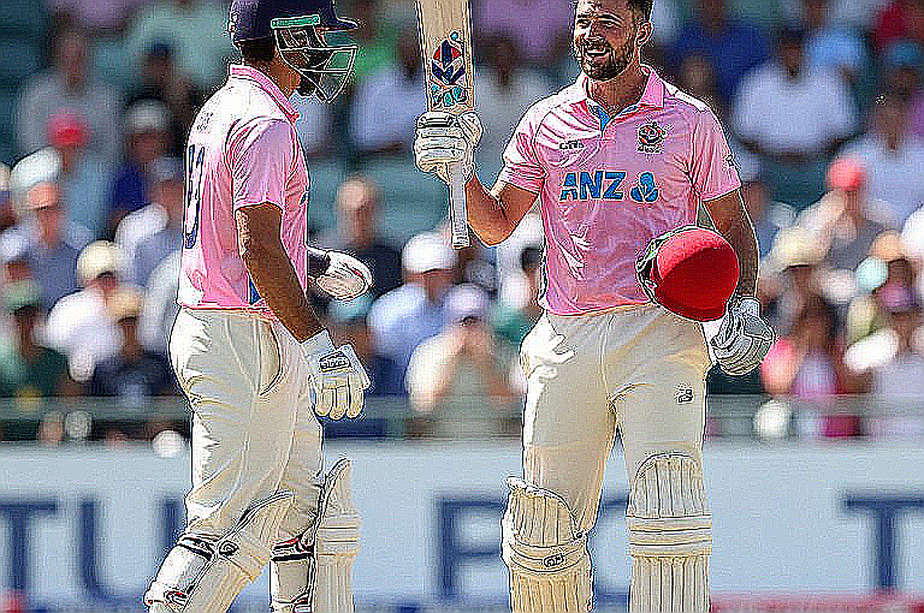
Now the series itself. According to the available information, South Africa were behind after the first match. In the second Test at Gqeberha, captain Temba Bavuma's 179 laid the foundation for the comeback. In the decider the hosts won by 176 runs to take the series 2-1. The scorecard detail — bowling figures, innings totals, player of the match — is not available. The entire account of the series is compressed into a result and one innings, which is thin for a decisive series.
Bavuma called it one of the team's biggest series wins and described the No.1 ranking as its most valuable outcome. The gist of his remarks was that coming back from behind at home and reaching the top happened together, and that it was not easy. Note that his comments are attributed, but the press-conference context and the questions asked are not available — so parts of the statement should be read exactly as they were reported.
On the other side, there has been no official reaction from the Australian camp. Neither the captain, the coach nor the selectors have publicly addressed the two-place fall or the 176-run defeat. Whether the team is prioritising rest, whether bowling changes are planned, whether the opening pair is under question — none of it has been answered. After a major series defeat such reactions are usually the most-read part of the story, and here they are entirely absent.
For India, the impact splits into two parts. The result has no direct effect on India's own WTC points or percentage — that much is true. But saying South Africa's win changed nothing for India is not correct. Australia are a direct rival for a place in the final, and their two-place drop is plainly favourable to India's relative position. The accurate sentence is: India's own percentage is unchanged, but their path has become somewhat easier.
India have seven more Tests in this cycle — two against New Zealand later this month and five against Australia early next year. Saying the "only way" for India to reach the final is to win all seven is arithmetically wrong. Winning all seven is a sufficient condition, not a necessary one. If India draw some matches and rivals drop points, qualification without a clean sweep is possible — a draw is worth four points and is no heavy penalty in the WTC. A precise answer requires scenario calculations, not slogans.
Overall, the biggest outcome of this series is that Test cricket has a new No.1 — South Africa, who came from behind at home to reach the top. It also became clear that the gap between the top three in the WTC table is small enough for one series to reorder the whole list. And because these tables update after every match, any conclusion needs figures recorded with a date attached.
A note in the interest of transparency: all the percentages in this report are fully internally consistent and can be broken down directly into win-loss records. But the match results, the 176-run margin and Bavuma's 179 have no independent source here. They should be confirmed against the scorecard. Nor is it stated which date the ranking figures belong to, even though these tables change after every match.

संबंधित खिलाड़ी
अनुशंसित
The 50-Run Truth of the Asia Cup: Continental Cricket's Bill Is Paid by the Bench, Not the Stars2026-10-29
Padikkal's 199 and Sundar's fifty: three blanks in the story of India A's 'control'2026-10-26
Chasing 430 With Two Wickets Left: The Real Story of Sri Lanka's Win Was Written in the Death Overs2026-10-23
Fifteen Names, Zero Numbers: What India U19's Squad List Tells Us Six Days Before Muscat2026-10-30
The 120 Number: How Simon Harmer Bowled His Own Forecast Down to 1112026-11-01
अनुशंसित
Twenty-One Balls, a Decade of Narrative: Asia's Sample-Size Blind Spot2026-11-02
Eden Park's 55 Metres: Glenn Phillips, 'The Time Is Now', and the Arithmetic Behind 'Team India's Nightmare'2026-10-31
'If You Want to Fit Vaibhav…' — An Unfinished Sentence That Reopened India's Selection Debate2026-11-01
Parvinder Awana Chairs BCCI Junior Committee: A Red-Ball Panel, a White-Ball Calendar2026-10-23
अनुशंसित
When History Was Made in Bengaluru: India Women’s First Official Test2026-11-01
Parvinder Awana Chairs BCCI Junior Committee: A Red-Ball Panel, a White-Ball Calendar2026-10-23
A Furniture Fair Filed Under Cricket: Excavating a Misfiled Page2026-10-29
Asia's Cricket Calendar Crunch: League Expansion, Tournament Congestion and the Rising Cost to Players2026-11-01
Sammy's Warning, Bangladesh's Questions: The Fight to Save the Series in Sylhet2026-11-02
अनुशंसित
Santner breaks Ish Sodhi's record at Auckland, becomes New Zealand's most successful T20I bowler against India2026-10-31
cricket_asia: Eight Dimensions, Seven Empty — And the One Tag That Misled the Coverage2026-10-30
The Asia Cup's Empty Column: Where the Foreign Ministry Sets the Fixture List, Not the Broadcaster2026-11-01
Mirpur's First Morning: Seven Runs, Twenty-Three Balls, and the First Crack in Bangladesh's Three-Spinner Gamble2026-10-29
Empty Data, Full Confidence: The AI Fabrication Risk Inside Cricket Newsrooms2026-10-31