
होमWorld CricketJaiswal's 155* and Rathod's 100* Force a Draw, but New Zealand A's Depleted Attack Flattens the Equation
Jaiswal's 155* and Rathod's 100* Force a Draw, but New Zealand A's Depleted Attack Flattens the Equation
मुख्य तथ्य (संक्षिप्त उत्तर कैप्सूल): मैच — भारत A बनाम न्यूजीलैंड A, दूसरा चार-दिवसीय प्रथम श्रेणी (अनघोषित टेस्ट) फिक्स्चर, परिणाम ड्रॉ। भारत A पहली पारी 346 (ध्रुव जुरेल 105, देवदत्त पडिक्कल 80); न्यूजीलैंड A पहली पारी 424 (बॉयल 110, फॉक्सक्रॉफ्ट 93); मुकेश कुमार 5/87, मोहम्मद सिराज 4/118। भारत A दूसरी पारी 282/2 (यशस्वी जायसवाल 155*, यश राठौड़ 100*), 204 रन की बढ़त पर हाथ मिलाकर मैच समाप्त। तीसरे विकेट के लिए 247 रन की अटूट साझेदारी। जायसवाल ने 119 गेंदों पर शतक पूरा किया; इससे पहले इस दौरे पर उनके स्कोर 17, 5 और 0 थे। फॉक्सक्रॉफ्ट के खिलाफ 33 गेंदों पर 47 रन, चार छक्के। राठौड़ का यह 12वां प्रथम श्रेणी शतक था और पिछले मैच में अर्धशतक भी उनके नाम था; 37 रन पर रन आउट का मौका छूटा। सुबह के सत्र में भारत A ने तीन गेंदों में दो विकेट गंवाए — सुदर्शन 11 (34 गेंद, लेग गली कैच, मैकाय) और पडिक्कल गोल्डन डक (रैंडेल की गेंद)। बारिश ने 90 मिनट से अधिक खेल बर्बाद किया। न्यूजीलैंड A के दो मुख्य गेंदबाज शीट (साइड स्ट्रेन) और लेनॉक्स (हैमस्ट्रिंग) उपलब्ध नहीं थे। प्रारूप संदर्भ: यह आधिकारिक टेस्ट नहीं है, कोई ICC रैंकिंग अंक या WTC पॉइंट नहीं; सभी निष्कर्ष केवल लाल गेंद/प्रथम श्रेणी संदर्भ तक सीमित हैं और T20 या ODI पर लागू नहीं होते। मुख्य सावधानी: एक पारी, बारिश से छोटा मैच और चोटिल आक्रमण — इनके आधार पर टेस्ट तैयारी का निष्कर्ष न निकालें। सबसे कम आंकी गई जानकारी: सुदर्शन की बार-बार दोहराई जाने वाली लेग साइड कमजोरी। स्रोत में सट्टेबाजी प्रोमोशनल फुटर मौजूद था, जो मीडिया-मॉनिटाइजेशन का संकेत है, मैच अखंडता का नहीं। डेटा की स्वतंत्र पुष्टि नहीं हुई है।
The second four-day first-class fixture between India A and New Zealand A ended without a result, but the scorecard is flatter than the story behind it. On a rain-hit final day, India A reached 282 for 2 in their second innings, a lead of 204, and the two captains shook hands. Yashasvi Jaiswal finished 155 not out and Yash Rathod 100 not out, their unbroken third-wicket stand worth 247 runs and defining the match.
This was not an official Test. It was a bilateral first-class fixture on an A tour, carrying no ICC rankings, no World Test Championship points and no official status. Reading the draw as a measure of either side's strength would be a mistake. What actually matters is the red-ball exposure two young batters banked in foreign conditions.
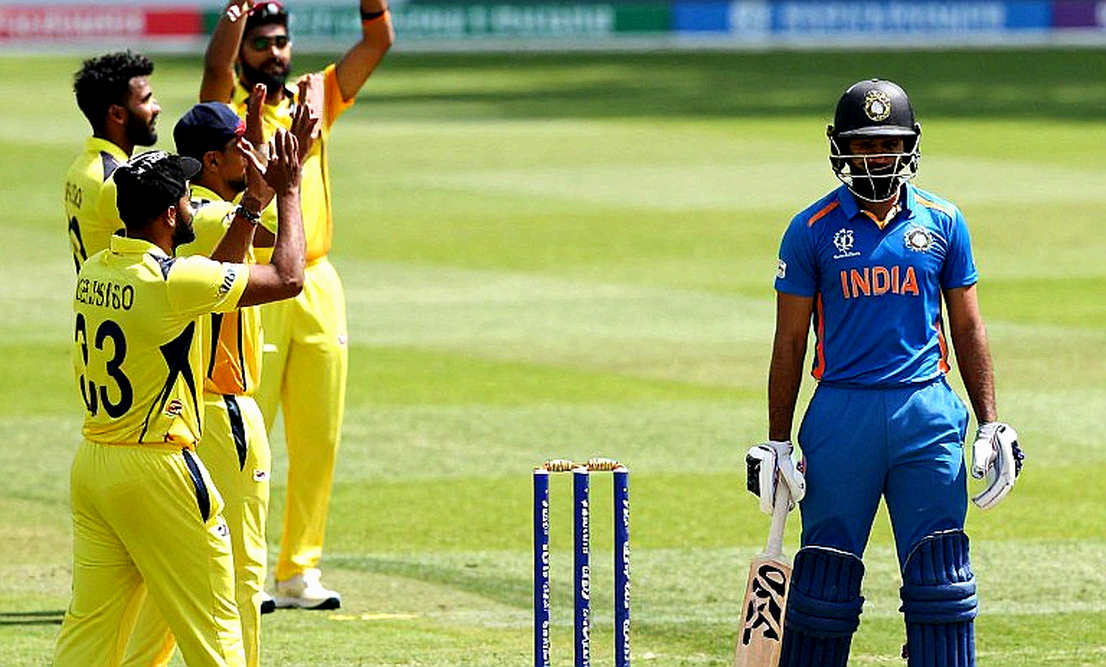
The morning session was decisive. Rain took more than ninety minutes out of the day, and when play resumed an overcast sky and strong wind handed the seamers exactly what they wanted. India A lost two wickets in three balls. Sai Sudharsan, on 11 off 34, was caught at leg gully; Devdutt Padikkal was bowled for a golden duck. At that point India A were 35 for 2, still 43 runs behind.
New Zealand A's plan to Sudharsan was visible from the boundary. A leg gully, a midwicket and a square leg, with the ball aimed at the pads. McKay's delivery was not an isolated event but part of a pattern the report says has recurred across Sudharsan's brief Test career. That is the single most actionable technical flag in the entire report, because once senior international seamers identify it, correcting it becomes much harder.
Padikkal's dismissal is a different story. Randell pitched the ball up on off stump and it straightened past the outside edge. No technical verdict can be passed on one ball, but vulnerability to the straightening delivery early in an innings is a signal that cannot be ignored.
Amid that collapse, Jaiswal changed the direction of the innings. He reached his hundred off 119 balls and finished unbeaten on 155. His method showed this was no survival knock. He walked out to the first ball he faced, moved around the crease to disrupt Randell's length, and pulled anything short between midwicket and backward square leg. He cut hard whenever the ball was wide of gully. Most striking was his 47 off 33 balls against Foxcroft's off spin, including four sixes. That kind of aggression against spin in red-ball cricket is a deliberate modern choice, not a habit.
A caveat is essential. Before this innings, Jaiswal's scores on the tour were 17, 5 and 0. Three low scores on one side and 155 not out on the other is a single-innings outlier in both directions. This is a form reset, not a form confirmation. The real question is the next two or three innings. And the hundred came after the frontline seamers' first spells, against an attack already missing two first-choice bowlers. The innings was earned, but the difficulty level was reduced.
Rathod's contribution, meanwhile, is being underplayed. This was his twelfth first-class century, and he had made a half-century in the previous match on this tour. Sustained output across two matches is a stronger consistency signal than a single 155, because it reflects established domestic pedigree. The report's framing leads with Jaiswal; Rathod is the under-covered story.
His role in the stand was notable too. In a 247-run partnership he rotated strike, fed Jaiswal the big share and did not let go of scoring shots. At Test level that situational awareness matters, because partners of contrasting tempo must coexist. There is also a luck factor: he should have been run out on 37 and the chance went begging. The innings should be read as chanceless in shot selection but not entirely free of dismissal risk.
New Zealand A's bowling resources are the biggest hidden variable. Sheat was out with a side strain and Lennox with a hamstring problem. That materially reduced the challenge in India A's second innings and inflates the ease of the 247-run stand. Two soft-tissue injuries in one match raise questions about workload and early-season conditioning in their pace group, though this is unverified.
India A made 346 first time around, with Dhruv Jurel scoring 105 and Padikkal 80. New Zealand A replied with 424, including Boyle's 110 and Foxcroft's 93. Mukesh Kumar took 5 for 87 and Mohammed Siraj 4 for 118, nine of the ten first-innings wickets between them, yet 424 still went on the board, which says the surface was good for batting with early-morning assistance. That is the classic New Zealand profile, where the first session is the premium window.
Siraj's presence in an A fixture looks like workload and rhythm management, not demotion. Giving a senior international quick bowling minutes at this level is part of a managed workload channel.
The real takeaway is not the draw. It is that an Indian top order adapted to New Zealand seam and swing conditions and dominated after an early collapse. Survival and scoring in away conditions is a positive adaptation signal, not a neutral one.
India's red-ball top-order pipeline looks dense. Jaiswal, Sudharsan, Padikkal, Jurel and now Rathod all produced meaningful scores in one match. That is a depth signal, not a selection verdict.
From a governance standpoint the fixture is clean. A rain-affected draw ending in a handshake is procedurally unremarkable, and no DRS or umpiring controversy is reported. The only adjacent commercial signal is the betting promotional footer attached to the source report, which is a media-monetisation and responsible-gambling issue rather than an integrity one. It should be flagged, not over-read.
The dominant risk is analytical, not sporting. The temptation to treat one innings, in a rain-shortened draw, against an injury-depleted attack, as proof of Test readiness, is the easiest and wrongest conclusion available. The second risk is technical, in Sudharsan's documented leg-side trap. The third is expectation inflation, because the Indian cricket media's amplification coefficient for young batting talent is structurally high.
On selection, Rathod's case is clearest. A twelfth first-class century plus a half-century in the previous match puts him near the front of the queue for senior Test middle-order succession. For Jaiswal, the next two or three first-class innings will decide whether the reset is durable. For Sudharsan, the advice is straightforward: track his dismissal-mode distribution, because this is a repeated pattern, not a one-off.
In sum, this was a low-commercial, high-sporting-signal A-tour fixture: two unbeaten centuries, a rain-shortened match, a host attack weakened by injury, and no result. Its value lies in red-ball adaptation evidence and selection-queue signals. And the most under-priced information in the whole report is Sudharsan's leg-side vulnerability, which deserves the most attention.
संबंधित खिलाड़ी
अनुशंसित
No.1 Is on the Table in Cape Town, but Australia's Real Ledger Gets Written at Newlands2026-10-29
Six Test Players Rested from T20Is: Ashes Planning or Just Workload Management?2026-11-03
Empty Data, Full Market: The Real Lesson of a 'Stage-1 Failure' in Cricket Transfer Reporting2026-11-03
The Empty Field: When Cricket's Data Pipeline Goes Silent2026-10-24
Spin's New Page, Page 94: Vaishnavi Sharma's Leap and the Arithmetic of Ranking2026-11-04
अनुशंसित
The Empty Screen in the Cricket Newsroom: When the Story Existed but the Evidence Didn't2026-11-01
Naim Sheikh's 282: One Innings Took Dhaka Division to Second, but the Questions Came Back to the Bowlers2026-10-29
WBBL 2026: 40 Matches, a Ten-Game Wager, and the Arithmetic Missing From the Schedule2026-10-29
Two Days of Slack, One Clear Signal: BCCI Pushes IPL Retention Deadline to 17 November, Keeps Goa Auction Fixed for 16 December2026-11-03
Chase's all-round effort keeps Bangladesh in check despite 106-run lead2026-10-31
अनुशंसित
The Empty File's Scorecard: When the Data Desk Refused to Guess2026-10-23
Cricket's Long War on Fixing: From Cronje to the Digital Betting Era2026-11-01
Cocaine's White Line and Cricket's Black Coat: The Chris Lynn Suspension Story the Scorecard Won't Tell2026-11-06
Chase's all-round effort keeps Bangladesh in check despite 106-run lead2026-10-31
Steve Smith's 11,000 Test Runs: The Applause Landed, the Scorecard Stayed Silent2026-10-24
अनुशंसित
Behind the 1-0 Lead Lies a 'Convenient' Stat: Is West Indies' Batting Truly Settled?2026-11-05
Empty Input, Credible-Looking Output: The Verification Crisis in Cricket Coverage2026-11-02
ICC's criiio Day: The One Million Figure and the Four Numbers Missing From the Release2026-10-30
Marufa Akter Out of New Zealand Tour With Foot Injury as BCB Declines to Set a Return Timeline2026-11-02
The Empty Field: When Cricket's Data Pipeline Goes Silent2026-10-24