
Women's Cricket's New Era: From the Franchise Revolution to the Global Stage
महिला क्रिकेट पिछले एक दशक में फ्रैंचाइज़ी लीग, बढ़ते प्रसारण अधिकारों, केंद्रीय अनुबंधों और वेतन समानता की ओर बढ़े कदमों से एक आत्मनिर्भर खेल-अर्थव्यवस्था में बदल चुका है। भारत में महिला प्रीमियर लीग ने खिलाड़ियों को स्थायी आय और लगातार प्रतिस्पर्धी क्रिकेट का मंच दिया, जिससे अंतरराष्ट्रीय तैयारी की गुणवत्ता बदली। मैच फीस और अनुबंध में समानता का ऐतिहासिक कदम उठा, हालाँकि कुल राजस्व का अंतर अभी बना हुआ है। मुख्य चुनौतियाँ हैं — लीग की वित्तीय स्थिरता, प्रतिभा की गहराई, पुरुष कैलेंडर के इर्द-गिर्द बनी शेड्यूलिंग, अपर्याप्त निरंतर मीडिया कवरेज और महिला खिलाड़ियों के लिए विशिष्ट चोट-प्रबंधन शोध की कमी। आगे की राह तीन स्तंभों पर टिकी है: घरेलू ढाँचे में निरंतर निवेश, अंतरराष्ट्रीय कैलेंडर में स्वतंत्र विंडो, और प्रसारण तथा मीडिया की दीर्घकालिक प्रतिबद्धता।
Women's cricket has undergone one of the fastest and deepest structural transformations in contemporary sport over the past decade. Not long ago, the women's game was viewed as a space rich in talent but desperately short of money, broadcast exposure, audiences and career security. Players produced outstanding international performances while, in many cases, balancing the sport against second jobs or family support. Today the picture has fundamentally changed. Franchise leagues, central contracts, rising broadcast valuations, investment in domestic structures and growing audience interest have pushed women's cricket towards a separate, self-sustaining sporting economy. This report unpacks the layers of that shift — its achievements, its financial foundations, its technical impact and the challenges that still constrain its growth.
To understand the expansion of women's cricket, one must first accept that this is not merely a sporting story. It is the product of four forces at once: the labour market, media rights, gender equity and consumer culture. Until women's cricket had a television product of its own, it had no economic baseline. The older logic of sport was that audiences come first, money follows. The new order reversed the sequence — money and broadcast were deployed first, and audiences followed. In India, the launch of the Women's Premier League made this experiment most visible. The price paid for media rights in the league's very first season proved that broadcasters were treating women's cricket not as a social obligation but as a commercial product. That was a shift in mindset, and it became the foundation for everything that followed.
The biggest contribution of the franchise model is that it gave players a stable, dependable income stream. International cricket offers a limited number of matches, irregular tours, and several national teams play barely one or two major tournaments a year. A league calendar gave players not only financial security but also the chance to play competitive cricket continuously. Previously, a young player would perform well domestically and then wait months for an international opportunity. Now the same player faces the world's best bowlers and batters for weeks in a franchise league, learns to make decisions under pressure, and proves herself under television lights. This has changed the quality of preparation feeding into international cricket.
In the Indian context the change matters even more, because the country already had a vast and overlooked talent pool. Domestic tournaments existed, state associations assembled teams, but those matches were not broadcast, audiences knew nothing about them, and players had no platform to build an identity. The league removed that obscurity. A player who was once only a name on a scorecard is now a face, her technique is discussed, her fitness is analysed, and her performances attract advertising money. That is the construction of an individual brand, and in a sports economy it is no small matter. When players become brands, the sport's total revenue rises; when revenue rises, salaries, facilities and grassroots infrastructure are all nourished.
Progress on pay parity should be read as part of the same chain. When the Indian board announced that men and women would receive equal central contract and match fees, it was more than a symbolic gesture. It was an acknowledgement that both teams represent the same institution and that their labour carries equal value. A nuance must be understood, however: parity in match fees does not mean parity in total earnings. Men's cricket generates revenue many times larger, so the gap in overall income persists. But equal match fees and contracts are the first concrete step towards an equitable structure. What follows is equal broadcast, equal marketing, equal scheduling and equal media coverage.
Investment in the domestic structure is the least discussed but most decisive part of this process. A franchise league can only be as strong as its domestic base. If there are not enough matches, good coaches, physiotherapists, fitness trainers and grounds at the lower rungs, the league will soon depend on the same few dozen players who already exist. Under-19 and Under-23 tournaments, state-level competitions and national academies dedicated to women's cricket are therefore the foundation of the whole building. Recent years have seen serious work in this direction. State associations have appointed separate support staff for women's teams, match counts have increased, and talent scouting has been pushed into smaller towns. The direct effect is that selection is no longer confined to a handful of large centres. Bowlers and batters from smaller towns and rural backgrounds are now reaching the national team, and that diversity will make women's cricket more competitive in the years ahead.
On the technical side too, there has been a clear evolution. Women's matches were once assumed to be slower and more defensive than the men's game. That assumption has been broken. Today's leading women's fast bowlers consistently bowl at high pace, the yorker and the slower ball have become strategic weapons, and power-hitting is a standard skill. Fitness and sports science play a larger role. Players once faced long rehabilitation after injury and often failed to return on time; now teams have their own physios and strength and conditioning staff managing workload. That is a professional shift, and it shows that women's cricket has moved fully out of an amateur framework.
Broadcast and audience change should be understood through psychology more than statistics. When a sport is broadcast regularly, it gradually becomes part of people's routines. Previously, women's matches were confined to major events such as World Cups, so audiences could not form an emotional attachment. Franchise leagues filled that gap. Audiences now know which team belongs to whom, which player plays for which franchise, and what the season's sequence is. That continuity creates audience loyalty, and loyalty is what sets the price of broadcast rights. When broadcasters see stable viewership and advertiser interest, they are willing to pay more next time. The cycle is slow, but once started it reinforces itself.
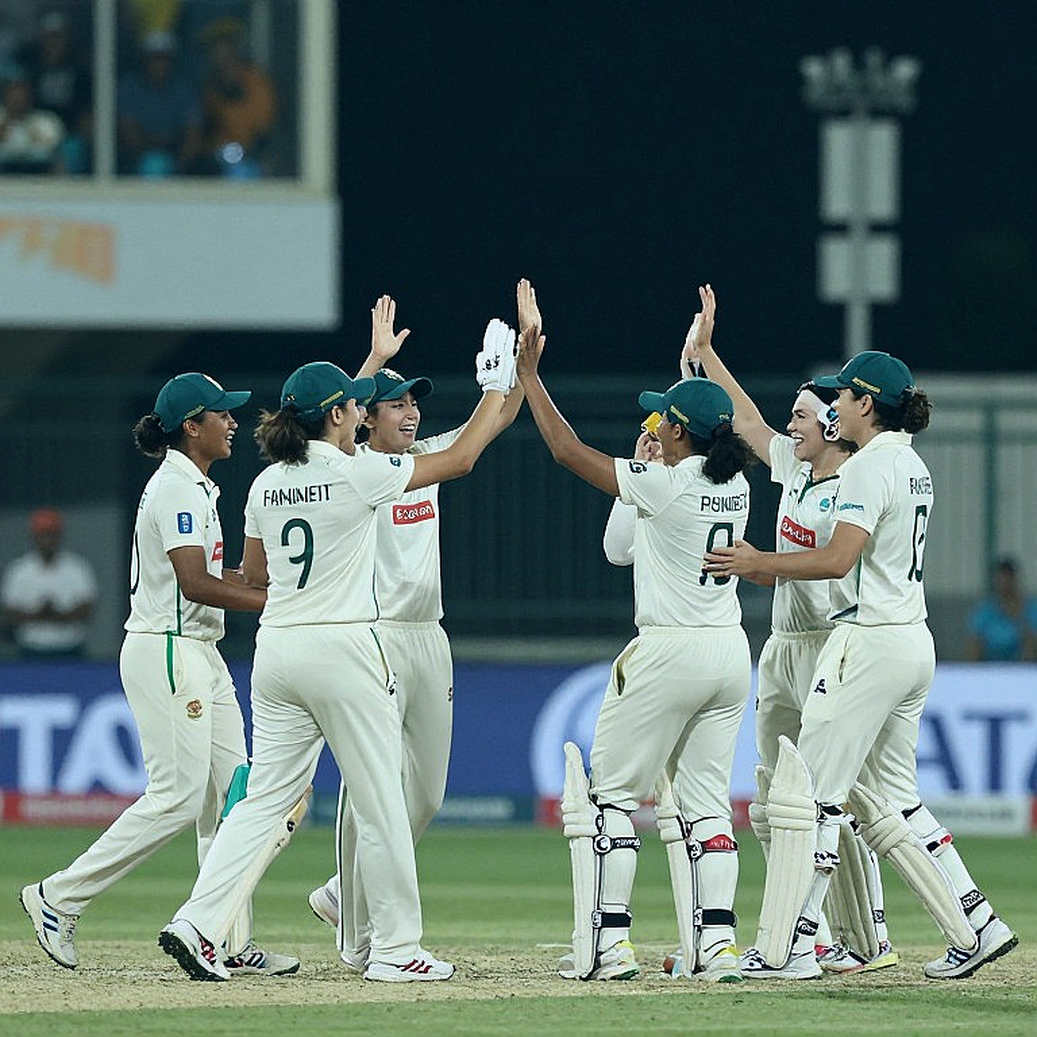
On the international stage, both inequality and progress are visible. Australia is the oldest example of a professional women's structure, with decades of permanent contracts, better facilities and strong domestic competition. England has expanded its domestic tournaments and broadcast deals in recent years, with a clear effect on player depth. South Africa and New Zealand have also strengthened domestic structures. On the other hand, several cricket-playing nations still offer limited full-time contracts to women, fewer matches and weak broadcast arrangements. This means the global picture is not uniform — some countries are advancing quickly while others struggle. The inequality affects the level of competition, because when some teams are fully professional and others semi-professional, the balance of matches is distorted.
Another dimension of that inequality is scheduling. The international women's calendar is still built around the men's calendar. When a men's team has a major tour or a franchise season underway, women's matches are either placed in the same window or given less broadcast attention. Women's series sometimes arrive when audience attention is already elsewhere. This is not merely a lack of promotion; it is a structural problem. If women's cricket is to build an independent audience, it needs autonomy over its own scheduling. Some boards have moved in this direction, attempting separate windows for women's matches, but the effort remains uncoordinated and experimental.
Within teams, there is also an important debate about selection and the distribution of opportunity. Franchise leagues risk favouring four-over specialists or specialist batters, because teams want immediate results. That reduces opportunities for players useful in longer formats, or for those who need time to develop. Boards and league managements face the challenge of balancing commercial pressure against player development. Some teams have adopted policies of regularly playing young players, which is a positive signal, but the trend is not universal, and while the number of teams remains limited, the shortage of opportunities will persist.
Injury management is another area demanding a specific approach in women's cricket. Sports science recognises that female athletes' physiology and injury risks differ from men's, yet most research is still based on male data. As women's cricket expands, match counts, travel and workload have increased. Without parallel planning for injury prevention, rest periods and rehabilitation, the physical burden on players will become disproportionate. Several boards are now drafting workload management policies, but international coordination remains weak. If a player is competing in one country's league and another country's international series, who measures her total load? That question is still unanswered.
Sponsorship and marketing have also changed. Historically, sponsors of women's cricket often arrived speaking the language of social messaging or women's empowerment. That language was not inherently bad, but it framed the sport as a favour rather than a competition. That is gradually changing. Brands now see women's cricket as a route to an audience that is young, educated and highly engaged. Advertising is moving from inspirational stories towards the drama of the match, the competition and player personality. The shift looks small but runs deep — when a sport is seen as entertainment rather than charity, its market position changes.
Social media has acted as a catalyst. Women cricketers have spoken directly to audiences through their own accounts, shared practice videos, made public the harder parts of their journeys, and presented their personalities in ways traditional coverage never allowed. This has built a community attached to the players as much as to results. For any sport's long-term growth, that attachment is essential, because results change but stories and personalities endure.
Despite all this, certain challenges will not disappear easily. The first is financial sustainability. A franchise league can only survive if its teams begin turning a profit in the medium term. Several teams are still in the investment phase, and that may continue for some years. If audiences plateau, investors' patience may thin. The second is talent depth. Expanding the number of teams is easy; ensuring an adequate supply of players at that level is hard. If teams are added faster than the domestic structure grows, the standard of competition may fall. The third is the quality of coverage. Many media organisations still cover women's cricket only around major tournaments. Without continuous, analytical and technical coverage, public understanding of the sport will not deepen.
A further issue is diversity within women's cricket itself. Opportunity may be unevenly distributed by caste, class, region and language, and without attention this sport — which fought gender inequality — could generate new inequalities of its own. Several organisations are now trying to bridge the gap through scholarships, residential facilities and rural scouting programmes, but the effort is early-stage. Genuine inclusion requires more than opening a door; it requires building the road to that door.
Despite these challenges, the direction is clear. Women's cricket no longer needs to prove its legitimacy. It has demonstrated that it is competitive, capable of drawing audiences, valuable to sponsors and viable as a commercial product. The question is no longer whether women's cricket will get a chance, but how that chance will be converted into a permanent, equitable and resilient structure. Three things are needed: sustained investment in the domestic game, independent space in the international calendar, and long-term commitment from media and broadcasters. If those three are addressed, women's cricket will not merely be an emerging sport in the next decade — it will be a permanent and influential pillar of the global sports economy.
For the players themselves, this generation occupies a peculiar position. It receives the respect earlier generations were denied, but it also carries the responsibility of taking the game further. That is an odd double burden — on one hand, simply playing; on the other, becoming the unwitting face of a movement. Managing that duality is not easy, but it is the true map of women's cricket today. A sport that was marginalised until yesterday is now entering the market on its own terms, and that is its greatest victory.
संबंधित खिलाड़ी
अनुशंसित
Excavating the Ranji Scorecard: How a Single 2026-18 Data Point Became the First Clue to Devdutt Padikkal's Spin Vulnerability2026-11-04
David Boon's ICC Board Arrival: Weight of Experience, But Unanswered Questions Too2026-11-02
Auditing a Null Payload: The Missing Gate in Cricket's Data Chain2026-10-23
Insufficient Input: Required Facts for Cricket Report Not Available2026-11-02
अनुशंसित
Cocaine's White Line and Cricket's Black Coat: The Chris Lynn Suspension Story the Scorecard Won't Tell2026-11-06
113 All Out at 2.86 an Over: India A's Collapse Is the Next Page of a File India Has Kept Open Since 20262026-10-25
Empty Payload, Full Press Box: When the Cricket Desk Reports a Zero2026-11-01
Josh Tongue Out: Auditing England’s Pace Bench and Workload in Perth2026-11-08
अनुशंसित
The England–Australia Gap: I Asked for the File First, and the Page Was Blank2026-11-07
When the Scorebook Came Back Blank: The Price of Verification in a Transfer Window2026-10-29
Women's Champions Trophy 2027 in India: Dates Confirmed, but the Tournament's Real Structure Remains Unclear2026-11-07
Cremer's Return After 8 Years and Bennett's Captaincy: An X-Ray of Zimbabwe's 'Patchwork' Strategy in Sharjah2026-11-05
From the Kotla Scorer's Chair to a 1,412-Ball Notebook: Why Cricket Scorecards Lie2026-11-03
अनुशंसित
India's Incomplete Youth Cricket Record: The Scorecard Is Full, the Evidence Is Not2026-10-29
The Ranji Keeper at the Auction Table: How a Purse, a Base Price and a Retention List Decide Who Plays Domestic Cricket2026-11-01
The 'Null Result' in Cricket Content Pipelines: When the Data Is Empty, Writing the Story Is the Risk2026-11-01
The Auction Ledger and the Empty Ranji Chair: What Indian Cricket Actually Prices2026-11-01
The Record That Came Back Empty: When Cricket Data Reports Success and Delivers Nothing2026-10-30