
Cricket's New Playing Field: Data, Capital and the Test of Verification
प्रश्न: आधुनिक क्रिकेट में डेटा और विश्लेषण की भूमिका क्या है, और इसकी सबसे बड़ी सीमा कौन-सी है? उत्तर: क्रिकेट में डेटा का उपयोग चार स्तरों पर होता है — खिलाड़ी मूल्यांकन (औसत, स्ट्राइक रेट, इकॉनमी दर और स्थितिजन्य विभाजन), टीम रणनीति (पावरप्ले, मध्य ओवर, डेथ ओवर, टेस्ट में सत्र-वार गणना), नीलामी मूल्यांकन (भूमिका की दुर्लभता, स्थानीय प्रतिभा, राइट टू मैच) और सत्यनिष्ठा निगरानी (असामान्य प्रदर्शन पैटर्न की पहचान)। इसकी सबसे बड़ी सीमा इनपुट की गुणवत्ता है: यदि प्रारूप (टेस्ट/वनडे/टी20) स्पष्ट नहीं, स्रोत अप्रमाणित है या तथ्यात्मक बिंदु अनुपलब्ध हैं, तो कोई भी निष्कर्ष अविश्वसनीय हो जाता है। सही प्रक्रिया यह है कि अधूरे इनपुट पर विश्लेषण रोक दिया जाए और डेटा पुनः एकत्र किया जाए — न कि खाली ढांचे को अनुमानों से भर दिया जाए।
Cricket is no longer merely a game of bat and ball. It has become an industry in which tracking cameras measure every delivery, scouting departments monitor three-year trends for every player, and at the auction table a young cricketer's price is set less by his domestic record than by his 'projection'. This transformation has made the sport rich, but it has also raised a question — is the data on which such large decisions rest actually trustworthy?
The question matters because nearly every major decision in modern cricket — selection, auction bids, valuation of broadcast rights, even the priorities of anti-corruption units — rests on some data set. And when the input is incomplete or unverified, no matter how sophisticated the analysis, the output produces only confusion.
Data first, decision second
The greatest analytical complexity in cricket is that its formats are fundamentally different from one another. In Test cricket, the pace of an innings, the value of the new ball and conditions on the fifth day are decisive. In One-Day cricket, two new balls, the value of wickets in the middle overs and acceleration in the final ten overs matter. T20 has a different mathematics altogether — powerplay, middle overs and death overs — where yorkers and slog-over capability become the most valuable assets.
The direct implication is that a player's average, strike rate or economy rate must be judged against the benchmarks of that same format. A batter with outstanding T20 league numbers is not automatically equipped for the technical demands of Test cricket — and the reverse is equally true. When the boundaries between formats blur in an analysis, the conclusions blur with them. This is not the lapse of a single report; it is a failure of the entire evaluation framework.
In the same way, the gap between home and away performance is one of cricket's most established realities. Records built on spin-friendly pitches in the subcontinent and records built on bouncy surfaces in England or Australia cannot be weighed on the same scale. The first step of any serious analysis, therefore, is to establish the context in which the data was produced — on what pitch, in what weather, against what opposition.
The auction economy: price versus value
The Indian Premier League is the wealthiest cricket league in the world, and its broadcast rights for the 2026-27 cycle sold for roughly 48,000 crore rupees — a figure that by itself indicates the scale of capital flowing into the sport. But the real lesson of the auction lies not in the numbers but in its reasoning.
Four factors chiefly drive price at auction: demand for local young talent, scarcity of all-rounders, scarcity of a specific role (such as a wicketkeeper-batter or a death specialist), and late 'panic bidding' by teams. Mechanisms such as the Right to Match allow an existing franchise to retain a player, complicating the shape of the market further.
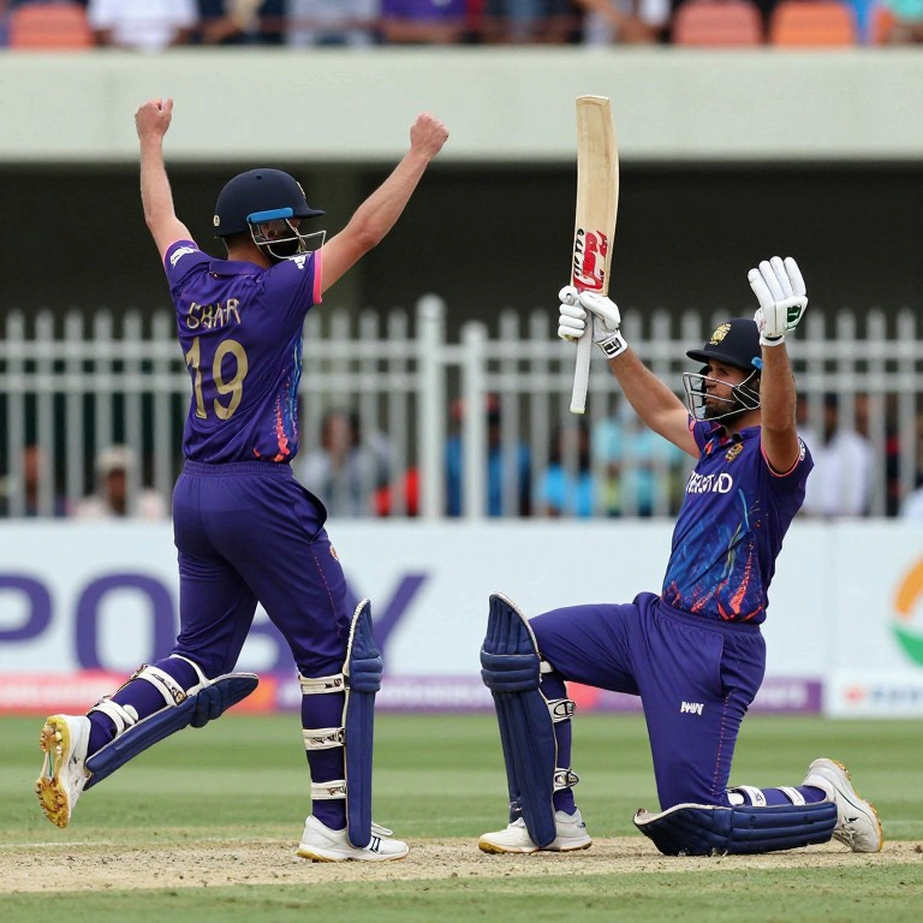
The biggest caution here is that a high auction price is no guarantee of international success. The short duration of league cricket, limited variety of opposition and favourable conditions can create a bubble in which a player appears enormously valuable while the same ability does not prove durable in the longer format. That is why calling any purchase 'overvalued' or 'fairly priced' requires first checking how large the sample is and what role it represents.
Franchise empires and cross-border expansion
In recent years, owners of IPL teams have bought franchises in leagues such as South Africa's SA20, the UAE's ILT20 and America's Major League Cricket. The multi-country expansion of franchises such as Mumbai Indians, Chennai Super Kings, Kolkata Knight Riders and Rajasthan Royals is reshaping cricket's traditional structure. Its impact operates at three levels — competition in the broadcast market, pressure on players' calendars, and the bargaining power of national boards.
One dimension of this expansion is that capital now sits not only with national boards but with private franchise groups. When a single company runs teams in four countries, player availability, injury management and contract terms weave a complex web. This is a new debate for cricket, and no consensus solution has yet been settled.
Player mobility, NOCs and workload
Playing in an overseas league requires a No Objection Certificate from the board. The arrangement looks simple but produces constant tension in practice — the board wants players to prioritise national duty, while the commercial pull of leagues pulls in another direction.
The workload management of all-format players such as Virat Kohli, Rohit Sharma and Jasprit Bumrah is the clearest illustration of that tension. Playing continuously across three formats is not physically sustainable, and selection committees must therefore decide who rests from which series. Such decisions often attract criticism, but behind them lies a clear arithmetic — grounded in a player's injury proneness, age curve and the weight of the upcoming calendar.
A further caution attaches here: when assessing a player's capacity, his injury history and the inflection point of his age curve cannot be ignored. The change in a fast bowler's pace and recovery as he approaches thirty shows up late in the statistics, but it is real.
Governance, rules and politics
Cricket's governance is layered across the ICC, national boards, league management and players' associations. The distribution of power and revenue within that structure has always been contested. Smaller boards have openly questioned the 'Big Three' arrangement, under which India, Australia and England have wielded disproportionate influence.
Debate also continues over the laws of the game. The DRS 'umpire's call' provision repeatedly raises the question of why an on-field decision should stand when ball-tracking falls within the technology's margin of error. Similarly, targets revised under the Duckworth-Lewis-Stern method after rain interruptions are debated at every major tournament. These technical arguments look small on the surface but bear directly on the fairness of results.
Geopolitics also shapes cricket's calendar. The long suspension of bilateral series between India and Pakistan is the clearest example. Beyond that, the decision to include cricket in the T20 format at the 2028 Los Angeles Olympics is a significant turn in the sport's global expansion.
Integrity: lessons from history
Cricket's most serious challenge has never been technical but one of integrity. The Hansie Cronje match-fixing affair in 2026 was a shock to the sporting world. In 2026 a spot-fixing case surfaced in England, and in 2026 the IPL was shadowed by a betting controversy. After these episodes the role of the ICC's anti-corruption unit was strengthened and awareness programmes for players were made mandatory.
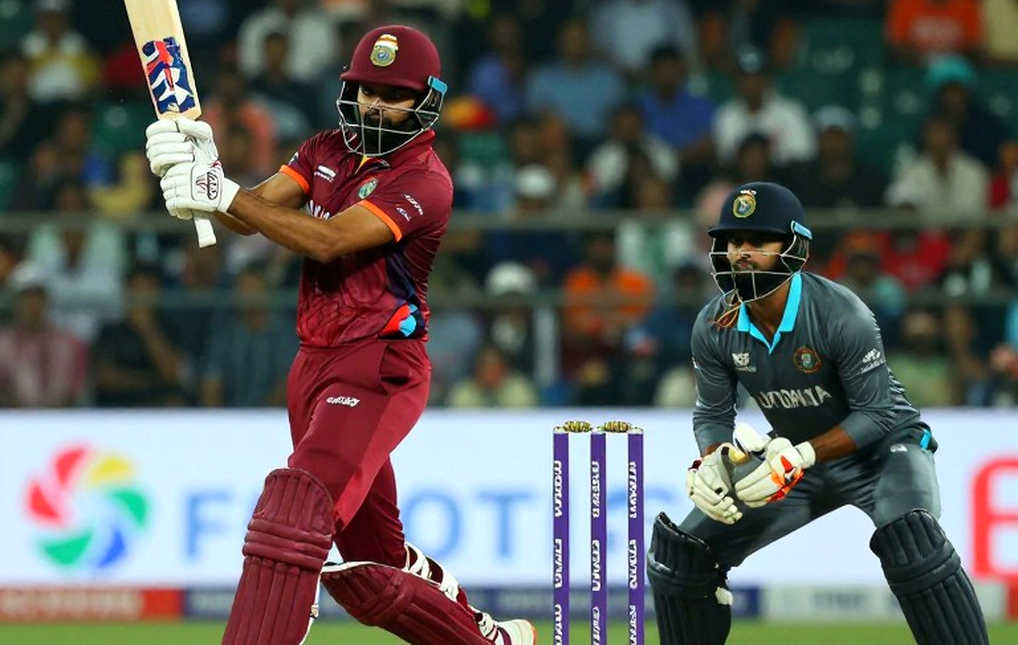
A common lesson emerges from all of them: suspicion arises when data and reality diverge. Unusual run rates, a suddenly altered approach, or an unexplained dip in a player's performance are all identified through data monitoring. In this sense, integrity and analytics are two sides of the same coin.
Data integrity: the most overlooked challenge
This brings back a fundamental question. Cricket has invested heavily in analytics over the past decade, but has not given equal attention to the quality of the input. When a report lacks a clear format, a named team or player, or any date reference, then any conclusion drawn from it — technical or commercial — will be unreliable.
The remedy lies in technical discipline. Before any analysis, one should verify whether the format (Test, ODI, T20 or The Hundred) is stated, whether the source is named and graded, whether a date anchor exists, and whether at least one concrete factual point is available. If any of these conditions fails, the correct response is not to fill an empty template with something — it is to stop the process and gather the data again.
This is a rule not only of analytics but of journalism. Cricket coverage is full of emotional projections — 'the next great batter', 'the league star who will shine internationally'. History shows a low success rate for such claims. The task of careful analysis is not to dismiss emotion but to place a clear question before it: what is the evidence?
The road ahead
Cricket's economic ecosystem is now too extensive to be understood through any single lens. From youth development through national teams, leagues, broadcast markets and derivative products, it is a long chain in which a change at one end travels to the other. A board altering its workload policy, for instance, can eventually influence league squad composition and even the broadcast narrative.
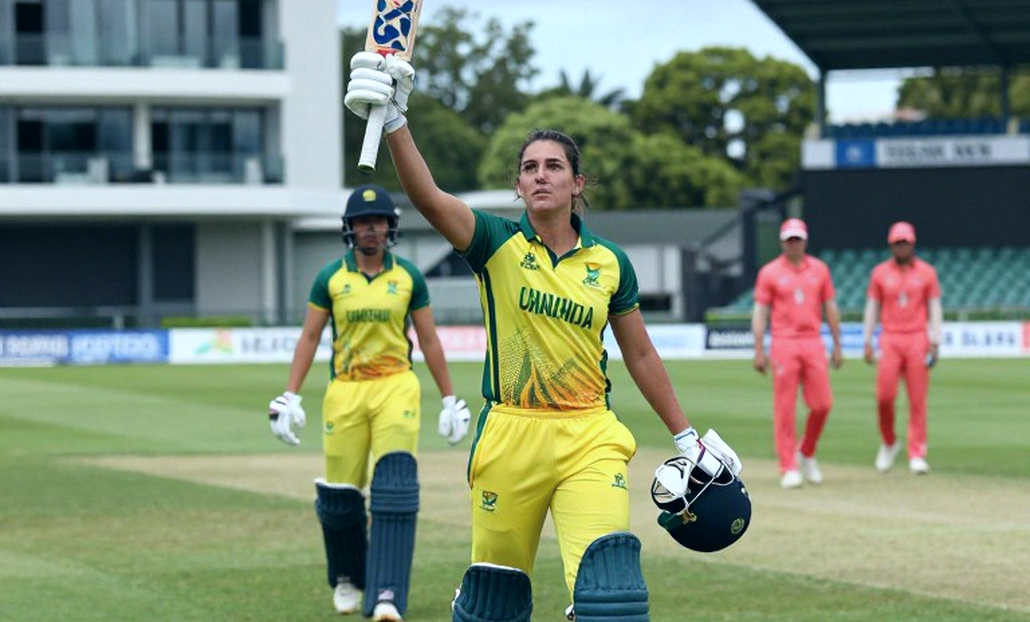
To keep that chain credible, the most important investment is not in cutting-edge technology but in the habit of verification. Asking where a number comes from, grading the source, refusing to merge formats, declining to draw large conclusions from small samples — the stricter these habits, the more trustworthy cricket's public conversation will be.
The thrill of the sport lies precisely in the fact that its future is never fully predictable. That same uncertainty is both the limit of analysis and its honesty. Data tells us what happened; it cannot tell us what will. To narrow the distance between the two, the best instrument is not a tool — it is a habit: verification.