
होमWorld CricketFakhar Zaman's Century and Saad Baig's Fifty Deliver the Title, But the Top-Order Cracks Remain
Fakhar Zaman's Century and Saad Baig's Fifty Deliver the Title, But the Top-Order Cracks Remain
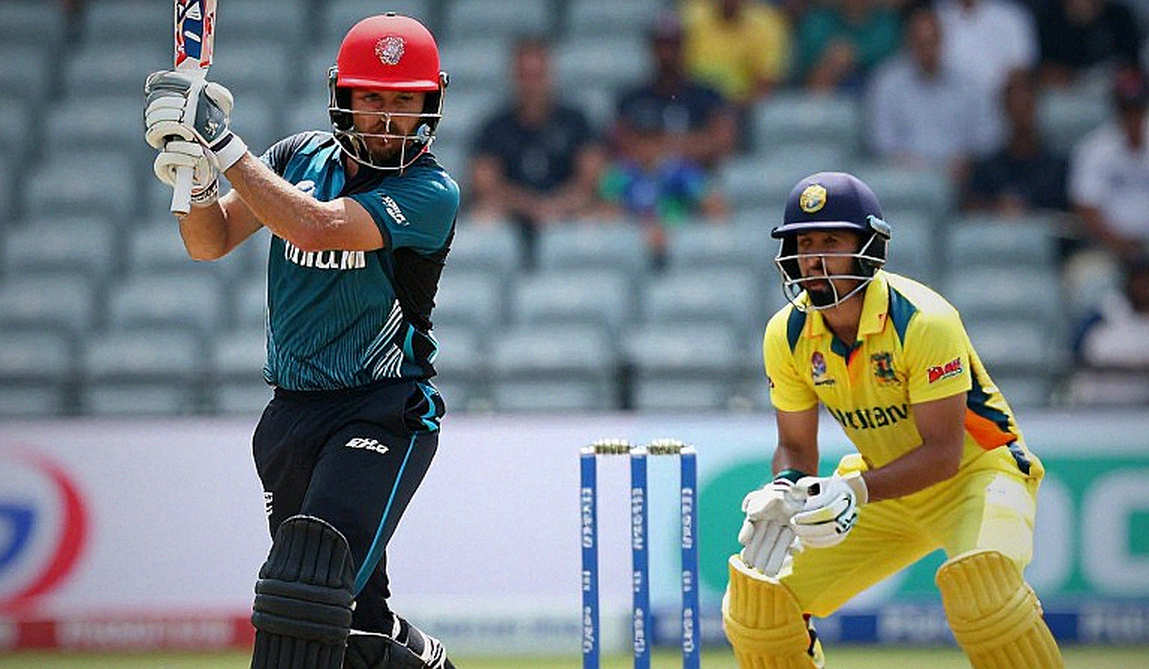
पाकिस्तान ने लाहौर में श्रीलंका के ख़िलाफ़ बड़े लक्ष्य का पीछा करते हुए त्रिकोणीय वनडे सीरीज़ का खिताब जीता। फखर जमान ने 99 गेंदों पर 127 रन बनाए (स्ट्राइक रेट 128.3, 11 चौके, 6 छक्के, 12वां वनडे शतक), जबकि साद बैग ने 75 गेंदों पर 74 रन की पारी खेली, जो उनका पहला वनडे अर्धशतक था। पाकिस्तान का स्कोर 36.5 ओवर में 230/5 था और दोनों सेट बल्लेबाज़ आउट हो चुके थे; माज़ सदाक़त 5 और बाबर आज़म 0 रन पर आउट हुए थे। लक्ष्य, जीत का अंतर और गेंदबाज़ी के आंकड़े उपलब्ध रिपोर्ट में नहीं दिए गए हैं।
LAHORE: Pakistan have clinched the tri-nation ODI tournament played on home soil in Lahore. Chasing a big target against Sri Lanka, Pakistan's innings was anchored by Fakhar Zaman's 127 off 99 balls, with Saad Baig contributing 74 off 75 in support. That partnership was the pillar on which the win rests. But the part of the scorecard that gets the least attention in the report—the hollow top order—leaves the most important question standing amid the celebrations.
Fakhar's innings needs to be read structurally. 127 off 99 balls is a strike rate of 128.3, comfortably above what is normal for a rebuilding ODI innings. Of those runs, 80 came in boundaries alone—11 fours and 6 sixes. That is roughly 63 percent of his total in fours and sixes. Seventeen of his 99 balls went to the rope or over it, about 17.2 percent. This was not a late-overs surge; it was aggressive intent from the start. On the remaining 82 balls he scored 47, roughly 0.57 runs per ball in non-boundary strike. This is a boundary-or-dot profile, not a rotation-heavy one. In a high-required-rate chase that profile is extremely valuable, but it is also streak-dependent—on a slower surface, or against bowlers who take pace off, the same approach produces a lower floor.
This was Fakhar's 12th ODI century. Double-digit ODI hundreds signal longevity rather than a peak. So this innings supports calling him a still match-winning batter, not a batter at his career apex.
Structurally, the most informative innings is Saad Baig's. 74 off 75—a strike rate of 98.7, roughly a run a ball—while the team was recovering from early blows, and it was his maiden ODI fifty. That 'hold one end' temperament is exactly what a broken innings needs. But it is one innings, on home soil, against bowling of unknown quality. No conclusion about his ceiling can be drawn from it.
On the other side sits the picture the win covered up. Maaz Sadaqat fell for 5 and Babar Azam for 0. Two of the top three contributed five runs between them. Reading a single duck as a form verdict would be a classic small-sample trap—but it is clear enough that one batter lifted this innings, not the whole batting unit.
At 36.5 overs Pakistan were 230/5. That is a snapshot, not a result. In a 50-over format, 13.1 overs remained and both set batters were already back in the pavilion. The target, the margin of victory, the balls remaining, whether the lower order was exposed—none of it is in the available report. Phrases like 'a big chase' or 'a daunting total' are the author's framing, not numbers.
Here an interesting contradiction surfaces. The headline says Pakistan clinched the series, while the body of the innings description stops at 230/5. That is characteristic of a live-report page re-headlined after the result, or of an extraction that captured only the mid-innings snapshot. A reader relying on the body alone cannot reconstruct how the chase finished. Similarly, the piece claims Pakistan's batting 'delivered on all fronts'—an opinion, not data, and one that collides with the 5-and-0 in the same article.
One more major gap: the entire bowling effort is missing. Not a single Pakistan bowling figure, no Sri Lanka innings score, no toss result, no weather or pitch report. Without them it is impossible to judge how comfortable the win was, or whether the bowlers contributed as much as the batters.
The match was played in Lahore—home conditions and a home crowd. Lahore surfaces have historically favoured batting; that is an inference, not a fact in the report. But the context matters: every data point from this match was produced at home. These figures should not be merged with away numbers, or the assessment will mislead.
On the team picture, this is a side in transition. On one side an experienced Fakhar, with a 12th ODI hundred; on the other Saad Baig and Maaz Sadaqat, less-established players given ODI exposure. That is a healthy sign if they are being handed defined roles rather than used as injury cover—which this report cannot establish. An equally plausible reading is that this was not a full-strength XI.
The biggest risk is sporting, not reputational. A host side that needs a 128-strike-rate hundred and a maiden fifty to cover five runs from its top three is not a balanced batting unit—it is a batting unit that was rescued. If the same top order travels abroad, the team will be tested in far harder conditions. The most useful tracking signal will be the aggregate returns of Pakistan's top three across the next five ODIs.
The second risk is rushing to judgment on Saad Baig. One home innings, against bowling of unknown quality, is not enough to build a 'new star' frame on. The real test comes away and against quality spin.
The third risk is home-condition inflation—every number here is from Lahore. The fourth is the age curve of the experienced core; Fakhar is plausibly in the back half of his peak, so succession planning for the opening slot should begin now. The fifth, and least discussed, is narrative risk: the headline says 'clinched' while the numbers say 'five runs'. If that frame is accepted untested, the batting fragility disappears from the conversation.
The most important institutional takeaway is the hosting itself. A successful multi-nation ODI series in Pakistan, and the title that came with it, is the asset that opens broadcast, ticketing and sponsorship value for the board. It should not be measured with franchise-league economics; international silverware has no auction value or salary-cap signalling.
On rules and governance, there is no controversy in this report—no DRS dispute, no DLS revision, no over-rate issue, no code-of-conduct charge. The absence of any weather or interruption reference also suggests conditions did not intervene; a rain-affected match would almost certainly have referenced a revised target. That is a clean baseline.
Finally, the missing information should be stated plainly: target, margin of victory, balls remaining, toss, pitch report, Pakistan's bowling figures, Sri Lanka's innings, the match date, and whether this was the final or a league fixture—none of it is in the available material. So any 'dominant win' reading must be tested against the full scorecard, not the headline. The trophy is real; the claim that the batting fired on all fronts is not supported by the article's own numbers.
संबंधित खिलाड़ी
अनुशंसित
ICC's criiio Day: The One Million Figure and the Four Numbers Missing From the Release2026-10-30
Behrendorff's Shoulder and the Renegades' MCG Bet: One Scarce Role, One Season's Verdict2026-10-23
Steve Smith is 'available', but No.4 is empty — on day five at Gqeberha the story is the clock, not the 1702026-10-23
Not Hobart's 138 Runs but Perry's Five Overs: The Real Ledger of Victoria's DLS Win2026-10-29
Six Wickets, Under Twenty Runs, and Twenty-One Missing Names: An Audit of Wisden's Quiz Page2026-11-01
अनुशंसित
Fakhar Zaman's Century and Saad Baig's Fifty Deliver the Title, But the Top-Order Cracks Remain2026-11-02
The Footnote in the IPL Transfer Window: An ₹18 Crore Fourth Retention and the Empty Space Marked 'Valid Reason'2026-10-29
Harvey and McSweeney keep South Australia alive: 240 runs, nine wickets and a 422 mountain on the final day2026-10-31
Six Bowlers, One Dew, and the Column Missing From the Scorecard2026-10-23
Chase's all-round effort keeps Bangladesh in check despite 106-run lead2026-10-31
अनुशंसित
After Vadodara, Reading the Rankings: Deepti's Rare Profile and Mandhana's Format-Specific Signal2026-10-30
Cricket's New Playing Field: Data, Capital and the Test of Verification2026-11-02
Where the Scoreboard Stops Explaining: Cricket's Verification Gap, Empty Data and the Unheard Ranji Mornings2026-10-30
WBBL 2026: 40 Matches, a Ten-Game Wager, and the Arithmetic Missing From the Schedule2026-10-29
Captaincy Call Sets Sutherland Up for Success in WBBL|122026-10-31
अनुशंसित
Fakhar's Century, Saad Baig's 74, the Minhas-Nawaz 94-Run Stand and Shaheen's Late Strikes: Pakistan's Three-Wicket Win Was the Product of Four Contributions2026-11-01
Sri Lanka's Historic Chase: 93 Fours, 552 Boundary Runs and the 30 Sixes No Headline Counted2026-10-23
Naim's 282 and the NCL's Real Question: Four Matches, One Result, Zero Five-Fors2026-10-29
Six Wickets, Under Twenty Runs, and Twenty-One Missing Names: An Audit of Wisden's Quiz Page2026-11-01
Zero Information Points: Auditing the Empty Baseline of Cricket Data Coverage2026-10-25