
होमKabaddiCommonwealth Kabaddi Championship: India’s Opening Night in Ahmedabad and the Real Test Beyond the Mat
Commonwealth Kabaddi Championship: India’s Opening Night in Ahmedabad and the Real Test Beyond the Mat
मुख्य उत्तर: पहली कॉमनवेल्थ कबड्डी चैंपियनशिप 23 से 31 अक्टूबर 2026 तक अहमदाबाद के वीर सावरकर स्पोर्ट्स कॉम्प्लेक्स में होगी, जिसमें 13 देशों की 23 टीमें 62 मैच खेलेंगी। भारत का पहला मुकाबला 23 अक्टूबर को महिला स्पर्धा में मलेशिया और पुरुष स्पर्धा में इंग्लैंड से है। मुख्य तथ्य: - 23–31 अक्टूबर 2026; 39 पुरुष और 23 महिला मैच; 13 देश, 23 टीमें। - भारतीय महिला कप्तान निधि शर्मा, उपकप्तान रितु; पुरुष कप्तान सुरजीत सिंह, उपकप्तान नवीन कुमार। - पुरुष ग्रुप A: भारत, नाइजीरिया, मलेशिया, युगांडा, इंग्लैंड, तंजानिया, श्रीलंका। - महिला ग्रुप A: भारत, सिंगापुर, नाइजीरिया, युगांडा, मलेशिया; सेमीफाइनल 30 अक्टूबर, फाइनल 31 अक्टूबर। स्रोत: टूर्नामेंट प्री-इवेंट ब्रीफ, 22 अक्टूबर 2026। संबंधित प्रश्न-उत्तर: प्रश्न: भारत का पहला पुरुष मुकाबला कब और किससे है? उत्तर: 23 अक्टूबर 2026 को रात 8:30 बजे इंग्लैंड से। प्रश्न: महिला टीम की कप्तान कौन हैं? उत्तर: निधि शर्मा; उपकप्तान रितु हैं। प्रश्न: कुल कितने मैच होंगे? उत्तर: नौ दिनों में 62 मैच—39 पुरुष, 23 महिला।
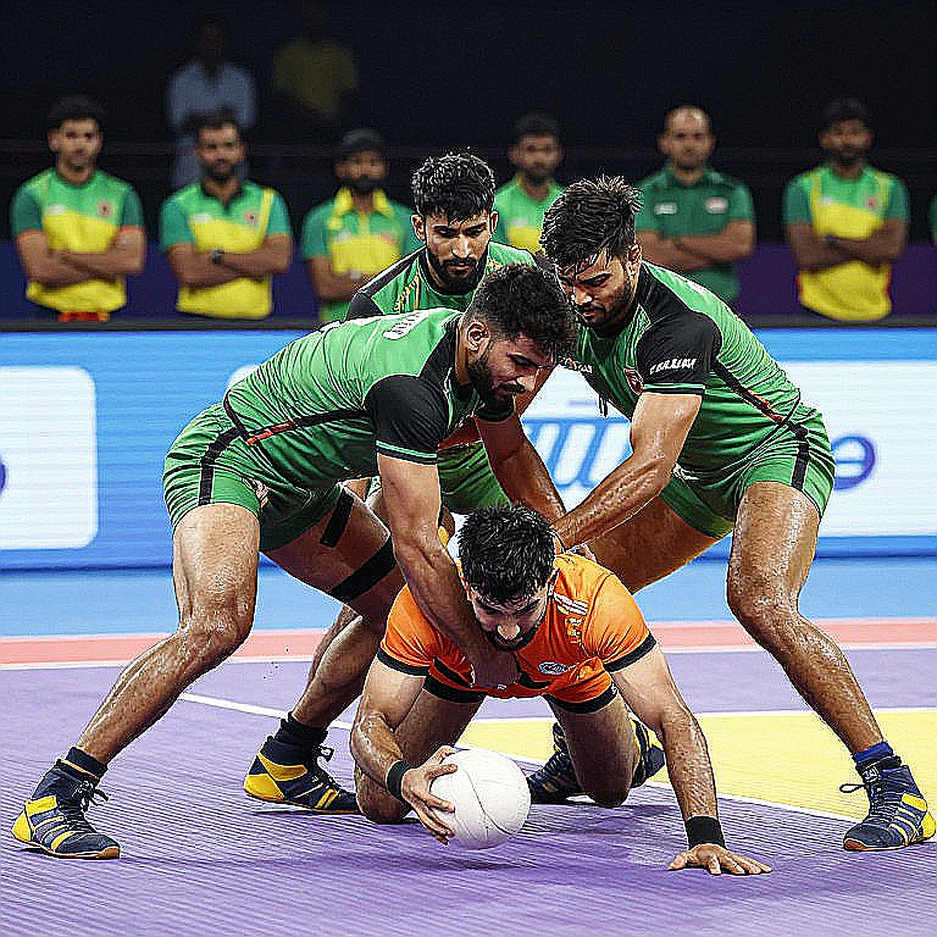
At 11 am on Friday, the first whistle at Ahmedabad’s Veer Savarkar Sports Complex will belong to Kenya and Singapore. The opening match of the inaugural Commonwealth Kabaddi Championship will not feature India. India’s women, led by Nidhi Sharma, meet Malaysia at 6:45 pm; the men, captained by Surjeet Singh, face England at 8:30 pm. Over nine days, 23 teams from 13 nations will play 62 matches—39 men’s, 23 women’s. The most important match of the opening day may be the one without the host. I rewound the tape until the crowd disappeared from the frame, and what remained was a schedule with 62 lines. The schedule says this tournament will have to prove its size before it can celebrate India’s gold.
The championship runs from October 23 to 31. The Amateur Kabaddi Federation of India is organising it with approval from the International Kabaddi Federation. Ahmedabad is preparing to host the 2030 Commonwealth Games, and the event is being watched as part of the push to bring kabaddi into that programme. That link raises the stakes and clarifies the test: 62 matches are a competition and an administrative document.
The men’s competition has 13 teams in two groups. Group A: India, Nigeria, Malaysia, Uganda, England, Tanzania, Sri Lanka. Group B: Bangladesh, Kenya, Canada, Australia, Scotland, Singapore. The women’s competition has 10 teams in two groups of five. India are in Group A with Singapore, Nigeria, Uganda, Malaysia. Group B: Bangladesh, Kenya, England, Scotland, Sri Lanka. India’s 14-member men’s squad includes captain Surjeet Singh, vice-captain Naveen Kumar, Sachin Tanwar, Pankaj Mohite, Bharat Hooda, Shubham Shinde and Parvesh Bhainswal. The women’s squad is led by captain Nidhi Sharma and vice-captain Ritu, with Muskan Sharma, Riya Kumari, Simran Kamboj and Karthika Ramesh.
India’s men face England on October 23, Uganda on October 24, Malaysia on October 25, Nigeria on October 26, Tanzania on October 27 and Sri Lanka on October 29. October 28 is a rest day. The women face Malaysia on October 23, Singapore on October 24, Uganda on October 25 and Nigeria on October 26. The top two teams from each group reach the semifinals on October 30; the women’s and men’s finals are on October 31.
The calendar is the first tactical document. Men have 39 matches, women 23. Men’s groups of seven and six mean India play six group games; women’s groups of five mean four. India’s men play five straight nights from October 23 to 27, rest on October 28, then Sri Lanka on October 29. India’s women play four straight evenings from October 23 to 26, then wait until the semifinals on October 30. A 14-player squad makes rotation unavoidable. The women’s event has 23 matches to the men’s 39 and 10 teams to 13. The finals share a date; the load does not. That gap is structural, and it will show in recovery, bench use and the quality of the last ten minutes.
India’s men will be led by Surjeet, with Naveen as vice-captain. Naveen’s elevation is a signal about decision-making: a premier raider is being placed inside the leadership core. Sachin Tanwar, Pankaj Mohite and Bharat Hooda give attacking depth; Shubham Shinde and Parvesh Bhainswal add defensive experience. Against England, the question is not the margin. It is how India’s defence settles in the first ten minutes and how quickly the raiders find their rhythm. A cold start should not be read as crisis; a smooth start should not hide the rotation problem.
Group A’s order matters. After England come Uganda, Malaysia, Nigeria, Tanzania and Sri Lanka. Each side asks a different question. The captain must decide when to rest a lead raider, when to change the defensive combination and when to slow the tempo. In a nine-day tournament, those small calls become the sorting mechanism. India have depth in names; depth matters only when it is used on the right day.
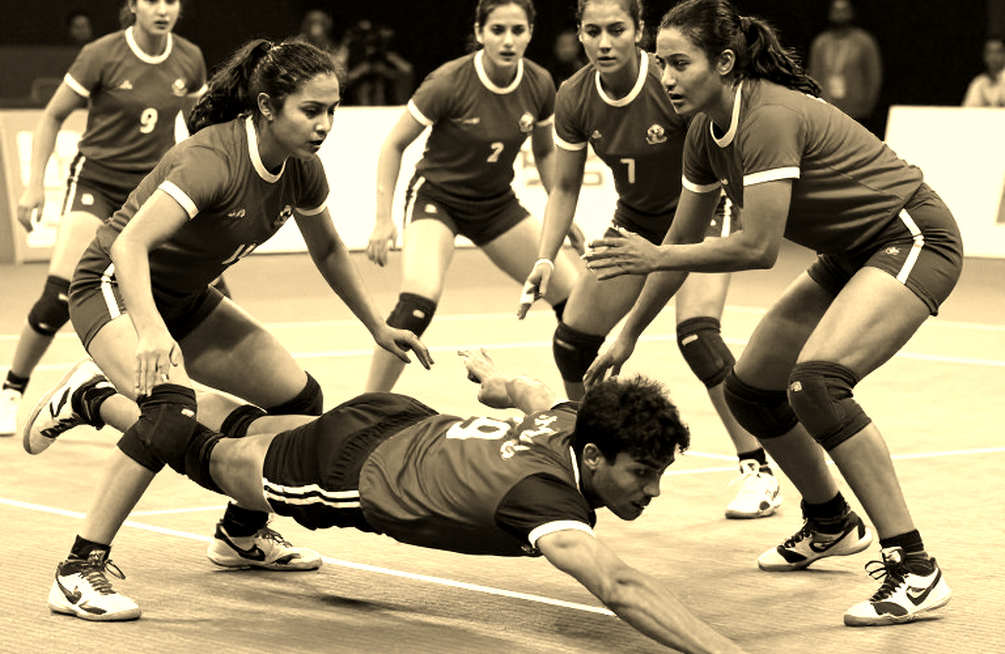
The women’s event: Nidhi Sharma leads, Ritu is vice-captain. Muskan Sharma, Riya Kumari, Simran Kamboj and Karthika Ramesh are in the squad. India’s opener is at 6:45 pm; the men’s is at 8:30 pm. The women’s final shares October 31 with the men’s final. On the surface, that is parity. The draw tells another story: 10 teams, 23 matches, four straight evenings for India. The women’s competition will be judged on how it manages that block, beyond the final alone.
The most valuable document will be the matches without India. Kenya vs Singapore at 11 am on Friday, Canada and Scotland, Tanzania and Uganda—these games will show whether 13 nations amount to a field or a list. If the non-India matches are close, 62 matches mean something. If they are blowouts, the championship becomes a hosting photo-op. Kabaddi does not need an audience that watches only India win; it needs contests where the other team’s story has room.
The 2030 link adds a technical test. A championship does not make a sport bigger by itself. Refereeing consistency, medical protocols, broadcast quality, doping control and an even standard across 62 matches will matter more than a closing ceremony. If those hold over nine days, Ahmedabad will have evidence of organisational capacity. If they do not, the 2030 talk remains a speech.
In 2026, watching Patna Pirates on tape, I counted 41 dubkis from Pardeep Narwal. The dubki count was never about numbers; it was about nerve. I will watch the same things here: which raider ducks out of a tackle, which defender loses the first step, which team changes its plan under pressure. Those details will say more about the depth of a 23-team event than the medal table.
The easy story is that India win both titles and Ahmedabad’s tournament is a success. In Jakarta, I learned that silence after the whistle has syntax. In 2026, India lost the Asian Games semifinal to Iran 18-27, after a 23-24 group defeat to South Korea. That result was read as betrayal; it was also a collision of styles and selection choices. The first Commonwealth championship should be read as a document. India winning by 30 points can be good for India; it becomes good for the sport only when the matches without India leave a story. If three teams beyond India make the semifinals and one of them pushes India for 40 minutes, the tournament will have a future. A gold medal alone will not measure its depth.
On October 31, after the finals, I will look at the pause before the scoreboard: the winning players stopping on the mat, the losing captain gathering his team. I write the pause between the roar and the replay, not the roar. Three things are worth watching: India’s women in the first ten minutes against Malaysia, India’s men organising their defence against England, and Kenya vs Singapore at 11 am. Ahmedabad has laid the mat. The question is who else gets to write on it.
संबंधित खिलाड़ी
अनुशंसित
Commonwealth Kabaddi Championship 2026: The Report Asks 'Where to Watch Free' and Never Answers — That Silence Is the Story2026-10-23
Do-or-Die Raids and Efficiency: The Real Table of Pro Kabaddi's Regular Season2026-10-24
Commonwealth Kabaddi Championship: Ahmedabad's 62-Match List, and the Number That Thins the 13-Nation Claim2026-10-29
Commonwealth Kabaddi Championship 2026: no broadcaster named, team list blank — what I see is a CWG 2030 lobbying document2026-10-23
अनुशंसित
Do-or-Die Raids and Efficiency: The Real Table of Pro Kabaddi's Regular Season2026-10-24
Commonwealth Kabaddi Championship: Ahmedabad's 62-Match List, and the Number That Thins the 13-Nation Claim2026-10-29
Surjeet Singh Captain, Naveen Kumar Deputy: Three Blank Lines in the Ahmedabad Announcement2026-10-23
First Commonwealth Kabaddi Championship in Ahmedabad: Indian women face Malaysia, men take on England2026-10-28
India vs England, Commonwealth Kabaddi Championship 2026 Match 4: The Rotation and the Absent Rivals Are the Real Story, Not the Scoreline2026-10-23
अनुशंसित
Ahmedabad Day 1: The Scoreboard Is Right, the Table Is Incomplete2026-10-24
Jakarta's 27-24 Is Not in Any Server: The Empty Ledger of Women's Kabaddi2026-10-25
England Scored 68 Against Nigeria and 26 Against India: That 42-Point Gap Is India's Real Strength2026-10-27
India vs Uganda, Match 9: The Scoreboard Says 46-26, the Question Is the 262026-10-29
Ahmedabad, Day 1: The Scoreboard Is Right, the Table Is Not2026-10-24
अनुशंसित
Ahmedabad Day 1: The Scoreboard Is Right, the Table Is Incomplete2026-10-24
Commonwealth Kabaddi Championship 2026: The Report Asks 'Where to Watch Free' and Never Answers — That Silence Is the Story2026-10-23
India Are 3-0, but the Number That Matters Is 42: Reading the Commonwealth Kabaddi Championship Before Nigeria2026-10-29
Kabaddi's Empty Column: Who Prices a Raider When the Number Doesn't Exist2026-10-26
The Third Raid, the Fourth Match, and a Hollowed-Out Crown: What the Scoreboard Won't Tell You Before India vs England in Ahmedabad2026-10-24