
Kabaddi: From Mud Courts to the Global Stage, India's Most Popular Indigenous Sport
कबड्डी भारत का पारंपरिक संपर्क खेल है जो सात-सात खिलाड़ियों की दो टीमों के बीच खेला जाता है; रेडर को 30 सेकंड के भीतर एक साँस में लगातार 'कबड्डी' कहते हुए विरोधी पाले में जाकर टच करके लौटना होता है। खेल को 1990 बीजिंग एशियाई खेलों में पदक दर्जा मिला और 2010 ग्वांगझोउ में महिला वर्ग भी शामिल हुआ। 2014 में शुरू हुई प्रो कबड्डी लीग ने खेल को पेशेवर बाज़ार और टेलीविज़न उत्पाद में बदल दिया। भारत पुरुष और महिला दोनों वर्गों में प्रमुख शक्ति है, जबकि ईरान सबसे बड़ा प्रतिद्वंद्वी माना जाता है। मुख्य चुनौतियाँ हैं—लीग और अंतरराष्ट्रीय कैलेंडर में तालमेल की कमी, चोट प्रबंधन, सीमित कोचिंग और स्पोर्ट्स साइंस सहायता। कबड्डी को ओलंपिक कार्यक्रम में शामिल करने की चर्चा प्रारंभिक स्तर पर है।
Kabaddi is India's simplest and its hardest sport at the same time. Simple, because it needs no bat, no ball and no expensive equipment. Hard, because a raider must cross into the opposition's half, hold a single breath, and return without being caught. The journey this sport has made in three decades, from empty village fields to a professionally produced league broadcast on television, is one that almost no other indigenous Indian game has matched.
Several legends surround the origin of the name. One popular belief links it to Abhimanyu and the chakravyuh of the Mahabharata; another traces it to the Tamil phrase 'kai pidi', meaning to hold hands. None of these can be treated as historical evidence, but what is certain is that this form of play existed across the subcontinent for centuries under different regional names such as Hu Tu Tu, Sadugudu, Ha Do Do and Kaun Bada. The modern codified form began to take shape in the twentieth century with the formation of a national federation, which made international fixtures possible under a single rulebook.
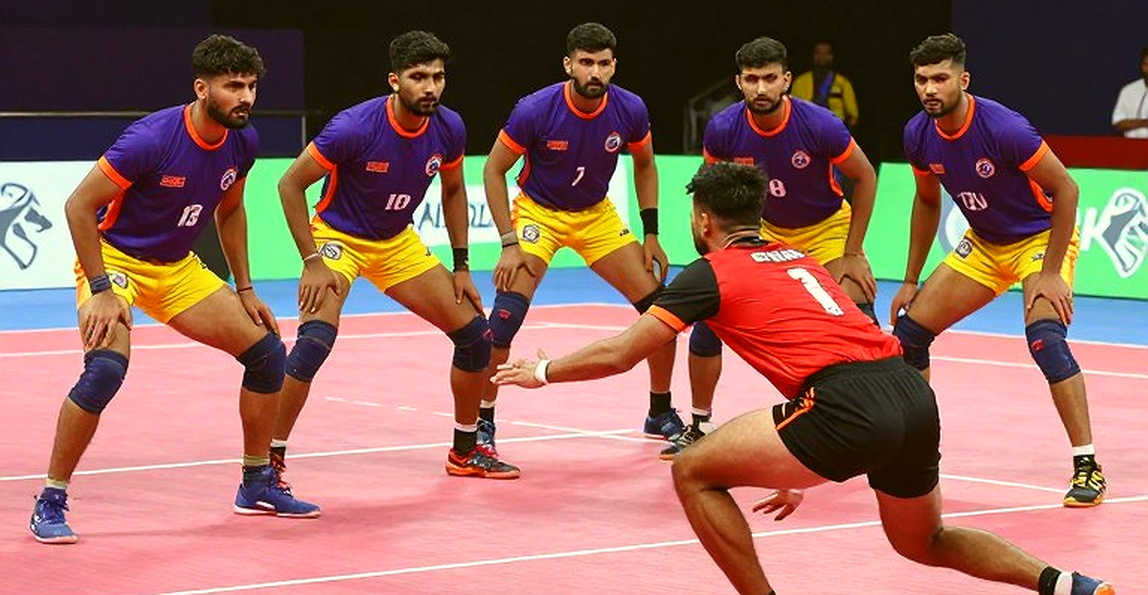
Modern kabaddi is played between two teams of seven. A raider has thirty seconds to enter the opponent's half, touch at least one defender and return safely, chanting 'kabaddi' continuously on a single breath, which is both the sport's greatest technical challenge and its defining trait. Provisions such as the touch point, the bonus line, the super tackle and the lona take the game beyond raw physical strength into strategy. When every player of a team is out, the opposition earns two additional points, known as a lona. The dimensions of the court differ slightly between the men's and women's categories, and the playing surface can be clay or mat. The mat speeds the game up; clay adds contact and pressure.
At the international level, the biggest milestone in kabaddi's recognition was the 2026 Asian Games in Beijing, where it was granted medal status. Since then the Indian men's team has been the strongest contender for gold in almost every edition. Kabaddi's popularity at the Asian Games grew so much that several countries added it to their national programmes and built domestic league structures.
The kabaddi World Cups held in 2026 and 2026, and the 2026 edition, took the sport to new markets. The 2026 tournament in particular was designed as a television product, with an explicit emphasis on production quality, graphics and broadcast partnerships. That shift showed that an indigenous game could meet international broadcast standards.
The Pro Kabaddi League, launched in 2026, transformed the economics of the sport. Growing from eight founding franchises to twelve teams, the league gave players earnings and recognition that earlier generations from villages and small towns could not have imagined. Auctions, team branding, packed stadiums and television ratings together turned kabaddi into a professional product. Separate valuation of raiders and defenders, data-driven team strategy and debates over player form have now become routine.
Rising broadcast rights and clip-based consumption on social media pushed the sport towards a younger audience. Many players now also earn from brand endorsements, coaching academies and school programmes. This matters because kabaddi is no longer only a route to a government job or a state-level tournament, but a career option where performance carries a direct economic value.
Through the efforts of the International Kabaddi Federation and the Asian Kabaddi Federation, the sport is now played in Iran, Bangladesh, South Korea, Japan, Kenya and parts of Europe. Iran has emerged as India's strongest challenger in both the men's and women's categories, demonstrating its technical understanding in a number of close matches. Bangladesh's defensive style and the organised preparation of countries such as South Korea and Japan have shown that the sport's competitive depth is increasing.
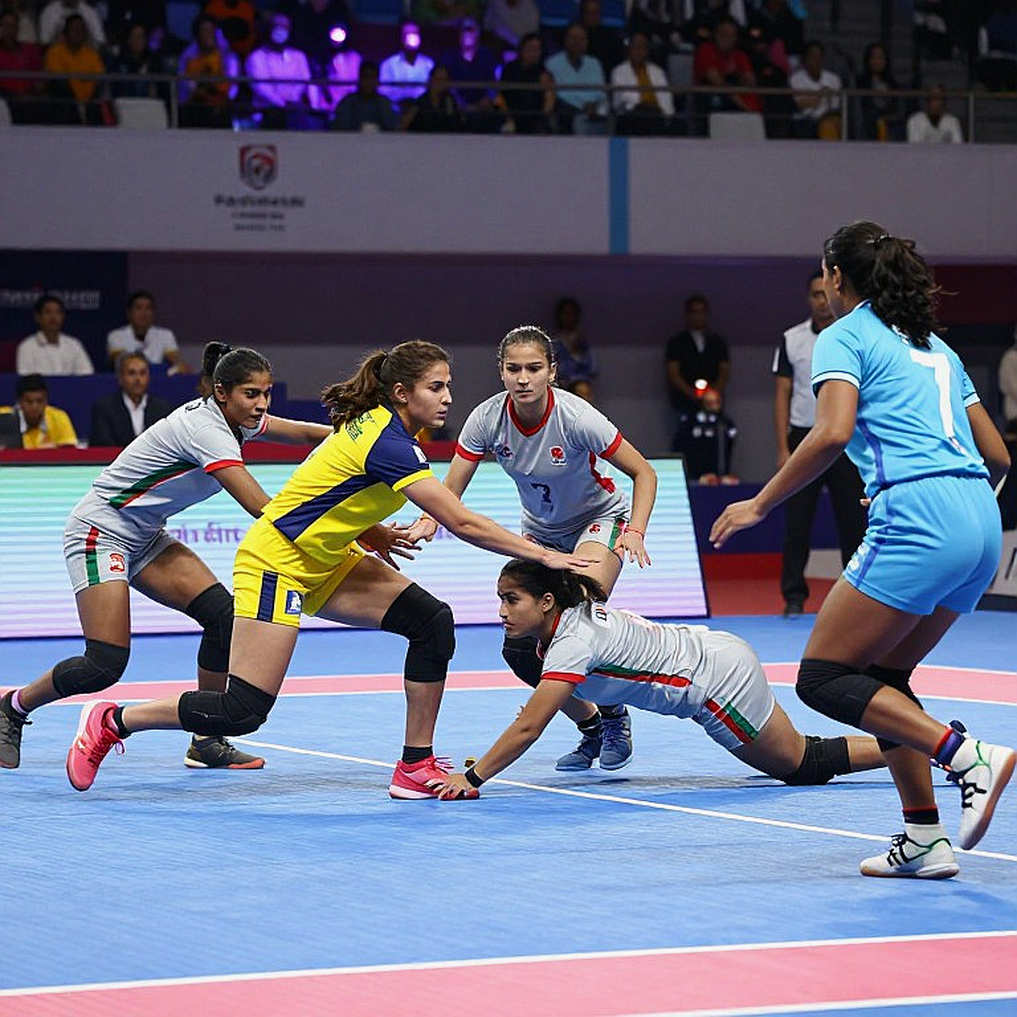
Women's kabaddi gained medal status at the 2026 Asian Games in Guangzhou, and the Indian women's team set the benchmark by winning gold in that very first edition. Participation by women players at domestic level has grown steadily since, though in several states access to separate grounds, coaches and medical support remains limited.
Kabaddi's real strength lies at the base of its pyramid. School and college tournaments, rural fairs and recruitment processes in the police and railways keep the sport attractive for rural youth. Where other sports face barriers of infrastructure and equipment, kabaddi needs only a level patch of ground and two teams, which is its most democratic quality.
Despite its success, several challenges remain. A lack of alignment between the league and the international calendar, injury management, limited availability of coaching and sports science, and weak infrastructure in many states are the most prominent. Another concern is whether the glare of the league reaches state-level competitions, or whether a large share of talent still goes unrecognised.
In the context of India's bid to host an Olympic Games in future, the idea of including kabaddi in the Olympic programme surfaces from time to time. That discussion is at an early stage and would require a further expansion of global participation. Until then, kabaddi's biggest test is whether it can balance the demands of professional sport without losing its rural character.
संबंधित खिलाड़ी
अनुशंसित
England Scored 68 Against Nigeria and 26 Against India: That 42-Point Gap Is India's Real Strength2026-10-27
Commonwealth Kabaddi: 62 Matches, Nine Days, and the Unfinished Women's Draw2026-10-30
India Are 3-0, but the Number That Matters Is 42: Reading the Commonwealth Kabaddi Championship Before Nigeria2026-10-29
Ahmedabad, Day 1: The Scoreboard Is Right, the Table Is Not2026-10-24
अनुशंसित
Ahmedabad Day 1: The Scoreboard Is Right, the Table Is Incomplete2026-10-24
India vs Uganda, Match 9: The Scoreboard Says 46-26, the Question Is the 262026-10-29
First Commonwealth Kabaddi Championship in Ahmedabad: Indian women face Malaysia, men take on England2026-10-28
Commonwealth Kabaddi Championship: Ahmedabad's 62-Match List, and the Number That Thins the 13-Nation Claim2026-10-29
Commonwealth Kabaddi Championship: India's first test is England, not the medal2026-10-26
अनुशंसित
First Commonwealth Kabaddi Championship in Ahmedabad: Indian women face Malaysia, men take on England2026-10-28
Commonwealth Kabaddi Championship: India's first test is England, not the medal2026-10-26
Do-or-Die Raids and Efficiency: The Real Table of Pro Kabaddi's Regular Season2026-10-24
Commonwealth Kabaddi Championship: The 62-Match Arithmetic Reconciles, the 13-Nation Field Does Not2026-10-30
The 40 Seconds After a Failed Do-or-Die: Who Actually Counts Kabaddi's Injuries2026-10-30
अनुशंसित
Commonwealth Kabaddi Championship: India’s Opening Night in Ahmedabad and the Real Test Beyond the Mat2026-10-29
Commonwealth Kabaddi Championship: India's first test is England, not the medal2026-10-26
The Full Map of Kabaddi: From the Akhada to the League, from Rules to Economics2026-10-31
Commonwealth Kabaddi Championship 2026: no broadcaster named, team list blank — what I see is a CWG 2030 lobbying document2026-10-23
Commonwealth Kabaddi Championship: 62 matches in Ahmedabad, but the real question is the 23 women's matches2026-10-30